





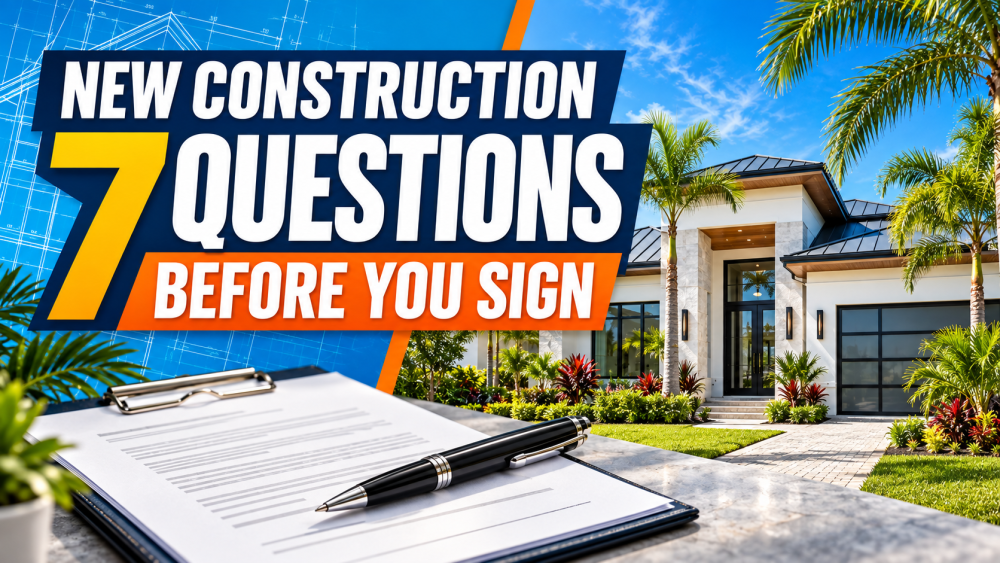
New construction can be a great choice in Naples and across Southwest Florida. Many buyers like the modern floor plans, new systems, energy efficient features, builder warranty coverage, and the chance to choose certain finishes. There is also something special about being the first person to live in a home.
The model home is the easy part to admire. Before you sign a builder contract, make sure you understand the total price, the contract terms, the construction timeline, inspection access, community costs, insurance, flood risk, and property taxes. A builder purchase can work very differently from a resale purchase, and the details vary from one builder and community to another.
Read my guide New Construction or Resale Home Which Is Better in Southwest Florida.
These are seven questions I recommend asking before you commit.
1 What is the complete price of the home I want
An advertised starting price may not include the homesite, structural options, design selections, appliances, landscaping, impact resistant windows, a pool, or some closing costs. Ask for a written estimate based on the home you actually want, not only the base model.
Ask the builder to show you each of these costs in writing:
- Base price
- Homesite or lot premium
- Structural changes and design selections
- Appliance and landscaping packages
- Impact resistant windows and doors
- Pool and outdoor living options
- Builder or lender credits
- Closing costs assigned to the buyer
- HOA assessments, amenity charges, capital contributions, and Community Development District assessments
2 What does the contract say about deposits changes and cancellation
Builders usually use their own purchase agreements. Those contracts can treat deposits, financing, inspections, changes, delays, and cancellation differently from a standard resale contract. Do not assume the same protections apply.
Before signing, identify:
- How much is due when you sign and at later construction stages
- Whether each deposit is refundable and under what circumstances
- What happens if financing is delayed or denied
- When selections become final
- Whether the price can change after you sign
- What the contract considers a buyer default
- What rights the builder has to substitute materials or change plans
- What happens if you need to cancel
For a purchase this important, consider having a Florida real estate attorney review the contract before you sign. A real estate advisor can help you organize questions and understand the transaction, but legal advice and contract interpretation belong with an attorney.
3 What is the realistic construction and closing timeline
A projected completion date may not be a guaranteed closing date. Permitting, weather, material availability, labor, inspections, and utility connections can affect the schedule.
Ask whether the contract gives a firm date, an estimated range, or broad extensions for delays. You should also understand:
- When the builder expects to provide a firm closing notice
- How much time you will have to obtain insurance and complete financing
- What happens to your interest rate lock if construction takes longer
- Whether you can inspect the home before closing
- Whether the contract offers any remedy for a substantial delay
If you are selling another home, relocating to Southwest Florida, or arranging movers, leave some room in the schedule. Planning for possible changes is easier than arranging temporary housing at the last minute.
4 Who is helping me and what is their role
The sales representative at the community works for the builder. That person can be helpful, but buyers should understand who the representative works for and what duties apply.
Florida recognizes different brokerage relationships. A transaction broker provides limited representation and is not a fiduciary or single agent. Ask your real estate professional to explain the relationship that applies before you share confidential information or sign an agreement.
A local advisor can help you compare communities, review the complete cost, evaluate available incentives, organize questions, and track important deadlines.
5 Can I use an independent inspector and when can inspections occur
A new home still deserves a careful inspection. New does not automatically mean perfect.
Ask whether the contract permits an independent Florida licensed home inspector and when access is allowed. Depending on the builder and the construction stage, inspections may be possible:
- Before drywall when framing and major systems are visible
- Near completion before closing
- During the final orientation and correction period
- Before the builder warranty expires
Confirm notice requirements, deadlines, access rules, and how inspection findings must be submitted. Ask for the complete warranty documents before signing so you understand what is covered, what is excluded, and how a claim must be filed.
Florida law provides specific implied warranties for certain new condominium units and improvements. Whether those protections apply depends on the property and the circumstances. A Florida real estate attorney can explain how the law applies to a particular purchase.
6 What will I pay for the HOA CDD and future amenities
Many new communities in Southwest Florida have a homeowners association. Some also have a Community Development District, commonly called a CDD. They are different obligations.
An HOA is governed by community documents and may collect assessments for operations, maintenance, and amenities. A CDD is a governmental district that can finance infrastructure and impose taxes or assessments on property within the district.
Ask for current written figures covering:
- HOA assessments and what they include
- CDD taxes or assessments and how they are billed
- Capital contributions and amenity charges
- Planned increases and future community phases
- Rules for rentals, pets, vehicles, and exterior changes
- Amenities that are open now
- Amenities that are planned but not yet complete
Florida law requires a conspicuous CDD disclosure in contracts for the initial sale of property within a district. For communities governed by Chapter 720, a prospective buyer must receive a disclosure summary before signing the sales contract. Condominium communities follow separate disclosure requirements. Read the full governing documents, not only the marketing material.
7 What should I expect for insurance flood risk and property taxes
Get insurance estimates early, preferably before the contract reaches a point where your deposit is no longer protected. A new home may include construction features that help with insurability, but the final premium still depends on the property, coverage, deductibles, location, and insurer.
Most homeowners policies do not cover flood damage. A separate flood policy may be required by the lender. Check the address through the FEMA Flood Map Service Center, then discuss the property, elevation, drainage, coverage, and available quotes with a qualified insurance professional. A FEMA map is an important starting point, but it does not provide the complete insurance picture.
Do not rely only on the current property tax bill. A bill for vacant land or an unfinished home may be much lower than the bill after the home is complete. A sale, completed construction, and available exemptions can affect the assessed value and future taxes. Ask the county property appraiser for guidance based on the completed home and your expected ownership situation.
Understand the Whole Purchase Before You Sign
Every builder, community, and contract is different. The right home is the one that fits your budget, timeline, and long term plans after you understand the complete cost and the obligations that come with it.
I help buyers compare new construction communities, completed inventory homes, and resale alternatives throughout Naples and Southwest Florida. My background in mortgage banking and residential real estate helps me explain how financing, costs, deadlines, property condition, and local market conditions can affect a purchase.
If you are considering a new home in Naples, Bonita Springs, Estero, Fort Myers, Cape Coral, Ave Maria, or another Southwest Florida community, I would be happy to help you ask the right questions before you commit.
Realty ONE Group MVP
Call or text 239 287 0539
stevenchaserealestate@gmail.com
Florida License SL3329468
stevechase.realtor
Frequently Asked Questions
Do I need a real estate advisor when buying directly from a builder
You are not required to use one. Having your own advisor can help you compare communities, review the complete cost, organize questions, and track deadlines. Contact your advisor before visiting or registering because builder policies differ.
Can I negotiate the price of a new construction home
Sometimes. Opportunities vary by builder, community, inventory, and market conditions. A builder may offer financing assistance, closing cost credits, or upgrades instead of reducing the recorded sale price. Confirm every incentive and condition in writing.
Should I inspect a brand new home
Yes. Ask whether the contract permits an independent inspection, when access is allowed, and how findings must be submitted. A new home can still have incomplete work or items that need correction.
Are CDD charges the same as HOA assessments
No. An HOA is an association governed by community documents. A CDD is a governmental district that can levy taxes or assessments to finance and maintain certain infrastructure and services. A property may have one, both, or neither.
Is flood insurance included in homeowners insurance
Usually not. Most homeowners policies do not cover flood damage. Ask a qualified insurance professional about the specific property and obtain quotes early in the purchase process.
Helpful Official Resources
- Florida brokerage relationships
- Florida HOA purchaser disclosure
- Florida CDD contract disclosure
- Florida condominium warranties
- FEMA Flood Map Service Center
- Florida property tax information
- Florida professional license verification
Property specific verification is still required for builder incentives, prices, deposits, contract terms, completion dates, inspection access, warranties, HOA and CDD assessments, amenity status, insurance premiums, flood information, and property tax estimates.
General information disclaimer This article provides general real estate information. It is not legal, tax, insurance, inspection, construction, or engineering advice. Buyers should consult the appropriate qualified professionals about their individual transaction.